by Steve Reiss (stevenreiss@scienbizippc.com)
Do you have a kennel of any type on your premises? Are you running certain types of animal businesses?
You should always check with the local (e.g., city or county) laws of your jurisdiction to determine how
many dogs you may have or the nature of your business before you need to start jumping through the
local hoops?
In the US, the regulation of dogs and cats is a local issue; meaning this is left to the individual states to regulate as they see fit. The regulation of dogs are cats is not a federal issue; though dog regulation may collaterally come under federal oversight through the Americans With Disabilities Act.
Furthermore, while state law usually sets dog policy for the state, state law usually allows for incorporated cities and counties having a population over a certain amount (e.g., 300,000) can set dog policy and regulation within their jurisdiction so long as consistent with state law.
So, for example, in California, the number of dogs someone may have on their premises can be regulated at the county or city level. Thus, in unincorporated portions of Orange County, this is 3 dogs before special site licensing is required
(see Orange County 4-1-76). At the city level, in Santa Ana, the seat of Orange County, the same scheme applies, where to have more than 3 dogs, special site licensing is required. Santa Ana Municipal Code 5-50. In a more elaborate system, in Fullerton, on lots of 20,000 square feet
in size or less, three dogs are allowed and on lots in excess of 20,000 square feet, four dogs are allowed. Persons who live in apartments, condominiums, duplexes or
mobile homes are allowed a maximum of two adult dogs, subject to a management or homeowners’ association agreement or
regulation regarding the keeping of animals.See Fullerton City Code 15.17.030(J).
Note that this is merely for folks having 4
dogs. If you are also running a kennel, vet, or other business, a second
license may be required. See OC 5-1-29. This 5-1-29 license does not
state a minimum number of animals. So, for example, being a dog broker, where you have
1 dog on premises, may require the license for brokering business.
In summary, always consider:
1. Nature of use of property; and
2. Number of animals on property (regardless of whether used in business or as pets).
Sunday, October 15, 2017

Saturday, October 14, 2017
Rates of Euthanasia by Public Shelters
by Steve Reiss (stevenreiss@scienbizippc.com)
A 1997 survey of 1000 shelters by the National Council on Pet Population Study and Policy is instructive. Those shelters alone handled 4.3 million animals, with 64% (2.7 million) of the animals euthanized because of overcrowding, sickness, injury, or aggression. 13 Further survey results showed that, at those shelters, 56% of dogs and 71% of cats were euthanized, 25% of dogs and 24% of cats were adopted, and only 15.8% of dogs and 2% of cats were reclaimed by their owners.
67 Syracuse L. Rev. 115, *116
A 1997 survey of 1000 shelters by the National Council on Pet Population Study and Policy is instructive. Those shelters alone handled 4.3 million animals, with 64% (2.7 million) of the animals euthanized because of overcrowding, sickness, injury, or aggression. 13 Further survey results showed that, at those shelters, 56% of dogs and 71% of cats were euthanized, 25% of dogs and 24% of cats were adopted, and only 15.8% of dogs and 2% of cats were reclaimed by their owners.
67 Syracuse L. Rev. 115, *116
Understatement For Pet Owners
by Steve Reiss (stevenreiss@scienbizippc.com)
The problem arises when a prior owner asserts a claim to an animal after a hold period has expired and the animal has already been placed by direct adoption with a member of the public or transferred to a rescue or private shelter.
ARTICLE: LOOKING FOR A GOOD HOME: BALANCING INTERESTS IN THE DISPOSITION OF IMPOUNDED ANIMALS TO OWNERS AND RESCUES, 67 Syracuse L. Rev. 115, 118.
I don't think we really need a law review to tell us this.
The problem arises when a prior owner asserts a claim to an animal after a hold period has expired and the animal has already been placed by direct adoption with a member of the public or transferred to a rescue or private shelter.
ARTICLE: LOOKING FOR A GOOD HOME: BALANCING INTERESTS IN THE DISPOSITION OF IMPOUNDED ANIMALS TO OWNERS AND RESCUES, 67 Syracuse L. Rev. 115, 118.
I don't think we really need a law review to tell us this.
Saturday, September 30, 2017
Dog Breeders/Kennels and Trademarks (Part I)

by Steve Reiss (stevenreiss@scienbizippc.com)
The value of a dog is in large part based upon its pedigree. Its pedigree is not only based upon the dog's particular parents. Its pedigree is also based upon the reputation and good will of its breeder. The reputation and goodwill of the breeder is probably more important. Hearing that famous Kennel XYZ just had a litter of pups, may be enough to have potential purchasers of those pups running to Kennel XYZ before even knowing about the parents of those puppies.
Given that so much value of a dog is based on the name of its breeder, breeder kennel names are ripe for protection.
That dog breeder kennel names huge carry good will, are valuable, and should be protected, has been long recognized.
Almost concurrently with the founding of the AKC (American Kennel Club) in 1887, kennel names of prominent breeders were recognized. The first publication of registered kennel names was in the January 1889 issue of the Gazette. The first official rule governing kennel names appeared in the January 1, 1903 AKC's Rules for the Government of Dog Shows, See Registered Kennel Names.
Today, the AKC allows the registration of kennel names:
When a kennel name is registered [with the American Kennel Club], the American Kennel Club will exercise reasonable care in protecting the name for the use of the individual(s) to whom it has been registered. Currently, a Registered Kennel Name is protected in all positions of a dog's name. For example, if the name "Bob" was a Registered Kennel Name, then the name could not appear anywhere in the name of a dog without the written permission of the owner of that kennel name. Further, a dog or litter cannot be registered with a kennel as its owner unless the kennel name is registered with the AKC. Id.
So, the AKC offers a very limited trademark-like protection to those who register their kennel name with the AKC.
The question kennel owners must ask themselves is "Is the AKC protection enough?"
We will try and answer that question in Part II of the post.
This post is advertising material and not legal advice.
Saturday, September 23, 2017
Canine Intellectual Property Protection
by Steve Reiss (stevenreiss@scienbizippc.com)
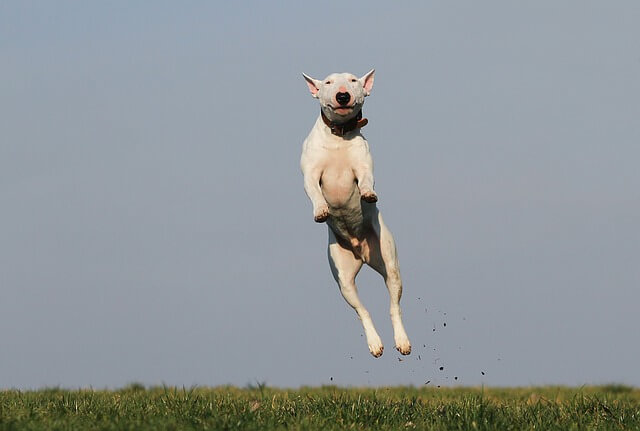
After almost 30 years of successfully practicing intellectual property law globally, my life long love of the canine has been calling me more loudly lately. Through these barks, I hear them telling me...protect our and our owners' Intellectual Property.
If you have any questions or intellectual issues, feel free to bark me a message here or at Facebook.

After almost 30 years of successfully practicing intellectual property law globally, my life long love of the canine has been calling me more loudly lately. Through these barks, I hear them telling me...protect our and our owners' Intellectual Property.
I am pleased that a portion of my practice will more closely focus on the canine and protecting them and their intellectual property. Including:
- Representing dog breeders and kennels with trademark and service mark acquisition;
- Helping dog breeders and kennels with contract preparation, negotiation, and review;
- Helping canine-focused entrepreneurs protect and brand new businesses and animal products, such as gourmet dog foods, toys, and clothes;
- Copyrighting canine photos, arts, and crafts;
- Assisting dog breeders and kennels with AKC kennel registration.
If you have any questions or intellectual issues, feel free to bark me a message here or at Facebook.

He stood up, listening and scenting. From far away drifted a faint, sharp yelp, followed by a chorus of similar sharp yelps. As the moments passed the yelps grew closer and louder. Again Buck knew them as things heard in that other world which persisted in his memory. He walked to the center of the open space and listened. It was the call, the many-noted call, sounding more luringly and compelling than ever before. And as never before, he was ready to obey.
Call of the Wild, Jack London (1903).
Saturday, September 9, 2017
The Seven Most Dangerous Dog Breeds
by Steve Reiss (stevenreiss@scienbizippc.com)
- Pitbulls – The Pitbull was at the top of the CDC’s list of dangerous breeds, with 66 dog bite-related deaths from 1979-1988.
- Rottweiler – The CDC says Rottweilers ranked second in dog bite-related fatalities with 39 deaths from 1979-1988. When combined, Rottweiler and Pitbull breeds were involved in approximately 60 percent of human deaths in the CDC’s study.
- German Shepherd – German Shepherds may be targeted for “banning” in certain areas, or refused coverage on some homeowners’ insurance policies because of their tendency to become territorial and protective, which can result in aggressive behavior. The CDC says German Shepherds were involved in 17 dog bite-related fatalities from 1979-1988.
- Husky-type – This breed was responsible for 15 dog bite-related fatalities from 1979-1988 according to the CDC.
- Malamute – Although similar looking to husky-type dog breeds, the Malamute is its own unique breed. The CDC reports that the breed was still involved in 12 dog bite-related fatalities from 1979-1988.
- Doberman Pinscher – These dogs were once common as guard and police dogs giving them a reputation of being intimidating and aggressive, especially towards strangers. The CDC reported this breed to be involved in nine dog bite-related fatalities from 1979-1988.
- Chow Chow – These dogs are known as an aggressive breed, fiercely protective of their people and property. The CDC reported this breed to be involved in eight dog bite-related fatalities from 1979-1988.
Tuesday, September 5, 2017
Flash of Genius
by Steve Reiss (stevenreiss@scienbizippc.com)

Is this what the courts meant by flash of genius. This is from USP6,790,043.
Saturday, September 2, 2017
Exception it is not
by Steve Reiss (stevenreiss@scienbizippc.com)
Under this
analysis, it is incorrect to impose on the patent owner, as the trial
court in this case did, the burden of proving that a "public use" was
"experimental." These are not two separable issues. It is incorrect to
ask: "Was it public use?" and then, "Was it experimental?" Rather, the
court is faced with a single issue: Was it public use under § 102(b)?
Thus, the court
should have looked at all of the evidence put forth by both parties and
should have decided whether the entirety of the evidence led to the
conclusion that there had been "public use." This does not mean, of
course, that the challenger has the burden of proving that the use is
not experimental. Nor does it mean that the patent owner is relieved of
explanation. It means that if a prima facie case is made of
public use, the patent owner must be able to point to or must come
forward with convincing evidence to counter that showing.[3] See Strong v. General Electric Co., 434 F.2d 1042, 1044, 168 USPQ 8, 9 (5th Cir.1970). The length of the test period is merely a piece of evidence to add 972*972
to the evidentiary scale. The same is true with respect to whether
payment is made for the device, whether a user agreed to use secretly,
whether records were kept of progress, whether persons other than the
inventor conducted the asserted experiments, how many tests were
conducted, how long the testing period was in relationship to tests of
other similar devices. In other words, a decision on whether there has
been a "public use" can only be made upon consideration of the entire
surrounding circumstances.
While various
objective indicia may be considered in determining whether the use is
experimental, the expression by an inventor of his subjective intent to
experiment, particularly after institution of litigation, is generally
of minimal value. In re Smith, 714 F.2d at 1127, 218 USPQ at 976.
TP Labs...
https://scholar.google.com/scholar_case?case=6859807306554231894&hl=en&as_sdt=2006&as_vis=1
Reissue
by Steve Reiss (stevenreiss@scienbizippc.com)
And even in the absence of any statute upon the subject, it was held that a reissue could be granted by the proper officer of the government,
Patent Office @132 page 307
(31 us 218)
And even in the absence of any statute upon the subject, it was held that a reissue could be granted by the proper officer of the government,
Patent Office @132 page 307
(31 us 218)
Arrows in the Dark And Fishing Expeditions While Patent Prosecuting
by Steve Reiss (stevenreiss@scienbizippc.com)
The process of patent examination is an interactive one. See generally, Chisum, Patents, § 11.03 et seq. (1992). The examiner cannot sit mum, leaving the applicant to shoot arrows into the dark hoping to somehow hit a secret objection harbored by the examiner. The 'prima facie case' notion, the exact origin of which appears obscure (see In re Piasecki, 745 F.2d 1468, 1472, 223 USPQ 785, 788 (Fed. Cir. 1984)), seemingly was intended to leave no doubt among examiners that they must state clearly and specifically any objections (the prima facie case) to patentability, and give the applicant fair opportunity to meet those objections with evidence and argument. To that extent the concept serves to level the playing field and reduces the likelihood of administrative arbitrariness.
The process of patent examination is an interactive one. See generally, Chisum, Patents, § 11.03 et seq. (1992). The examiner cannot sit mum, leaving the applicant to shoot arrows into the dark hoping to somehow hit a secret objection harbored by the examiner. The 'prima facie case' notion, the exact origin of which appears obscure (see In re Piasecki, 745 F.2d 1468, 1472, 223 USPQ 785, 788 (Fed. Cir. 1984)), seemingly was intended to leave no doubt among examiners that they must state clearly and specifically any objections (the prima facie case) to patentability, and give the applicant fair opportunity to meet those objections with evidence and argument. To that extent the concept serves to level the playing field and reduces the likelihood of administrative arbitrariness.
In Re Hans Oetiker, 977 F.2d 1443 (Fed. Cir. 1992) (Plager, Concurrence)
Subscribe to:
Posts (Atom)